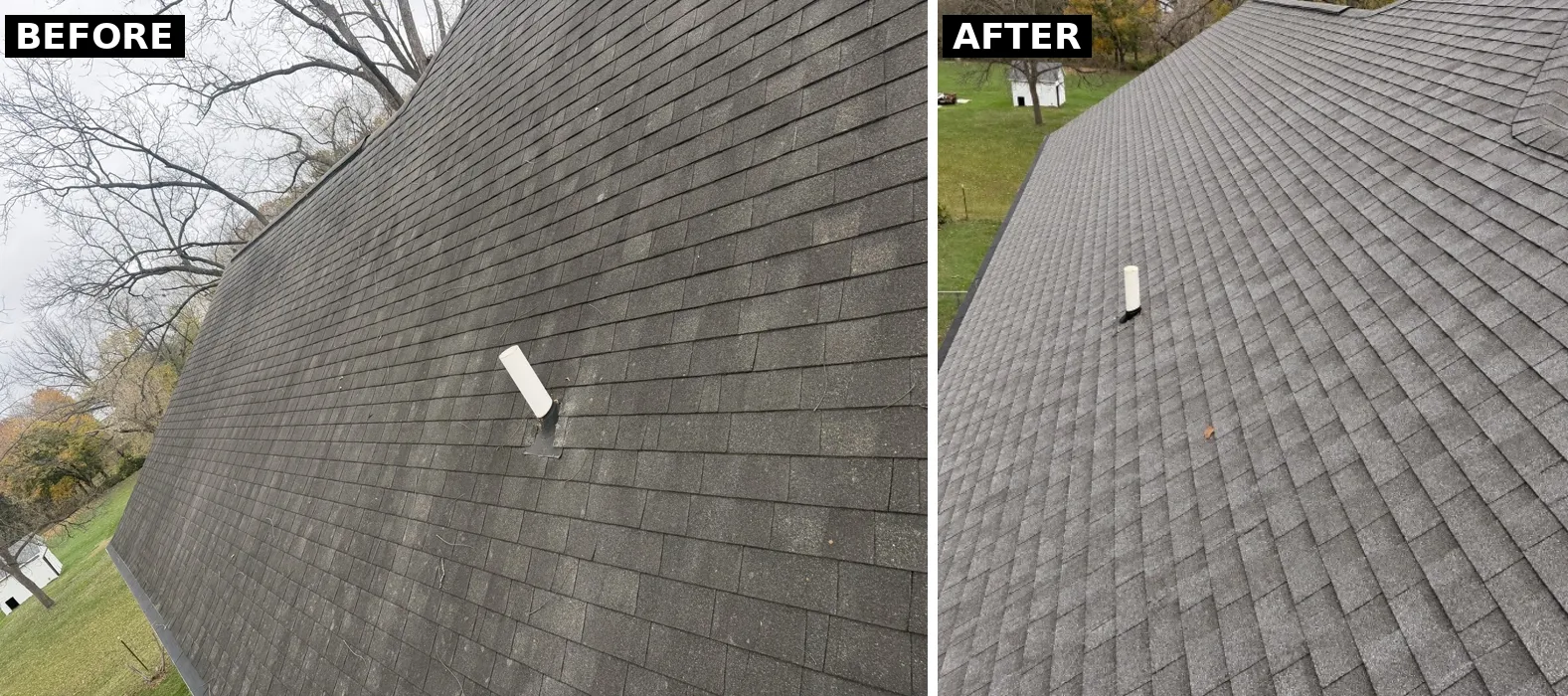
The Property
Sue's home in Dixon is a beautiful property, and a big part of its charm is the mature trees around it. In summer those trees throw a lot of shade across the house, and that shade has a downside: surfaces stay damp long after a rain, and damp, shaded surfaces are exactly where algae likes to grow.
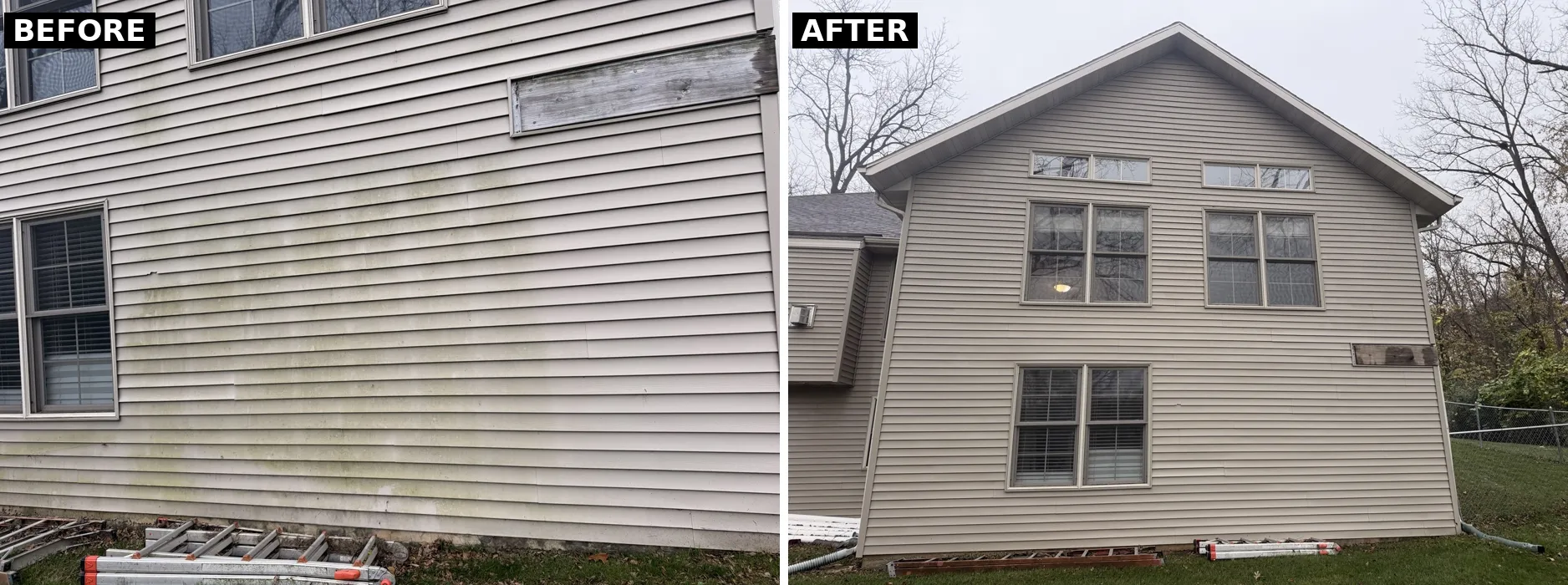
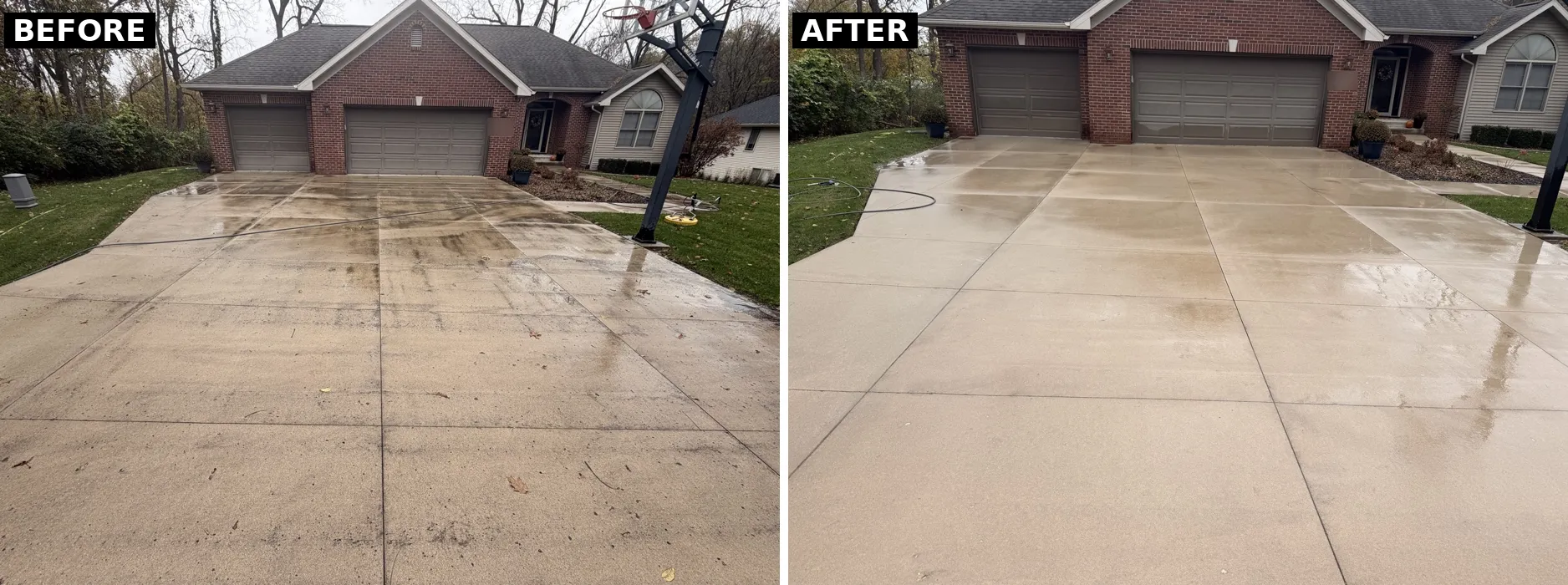
By the time Sue called us, algae had spread to almost every outside surface. There was green growth on the vinyl siding, streaking on the gutter faces, buildup on the window sills, dark staining on the driveway and sidewalk, and black streaks embedded in the asphalt roof shingles. Rather than tackling one area, we cleaned the whole property so the home looked consistent from top to bottom.
What Those Black Streaks on Your Roof Really Are
Those dark streaks are not dirt and they are not shadows from the trees. On most asphalt roofs they are a type of algae called Gloeocapsa magma. Its spores travel on the wind, land on the roof and feed on the limestone filler used in asphalt shingles. As it grows, it builds a dark outer coating that shows up as the black streaks so many Sauk Valley homeowners notice.
It spreads from roof to roof in a neighborhood and grows fastest on shaded, north-facing slopes that stay moist. Beyond looking unsightly, it causes real problems:
- A darker roof absorbs more of the sun's heat, which can add to summer cooling costs.
- Streaked shingles hurt curb appeal and can make a home look older to buyers, affecting resale value.
- The growth holds moisture against the shingles, which can shorten the life of the roof over time.
Want the full story? Read our guide, Black Streaks on Your Roof? What Gloeocapsa Magma Is and How to Remove It Safely.
Why We Never Pressure Wash a Roof
It's tempting to think a pressure washer is the fastest way to clean a roof, but high pressure does real damage to asphalt shingles. It can blast off the protective granules that shield the shingle from the sun, lift or crack shingles, and may void a manufacturer's warranty. Once granules are gone, they don't come back.
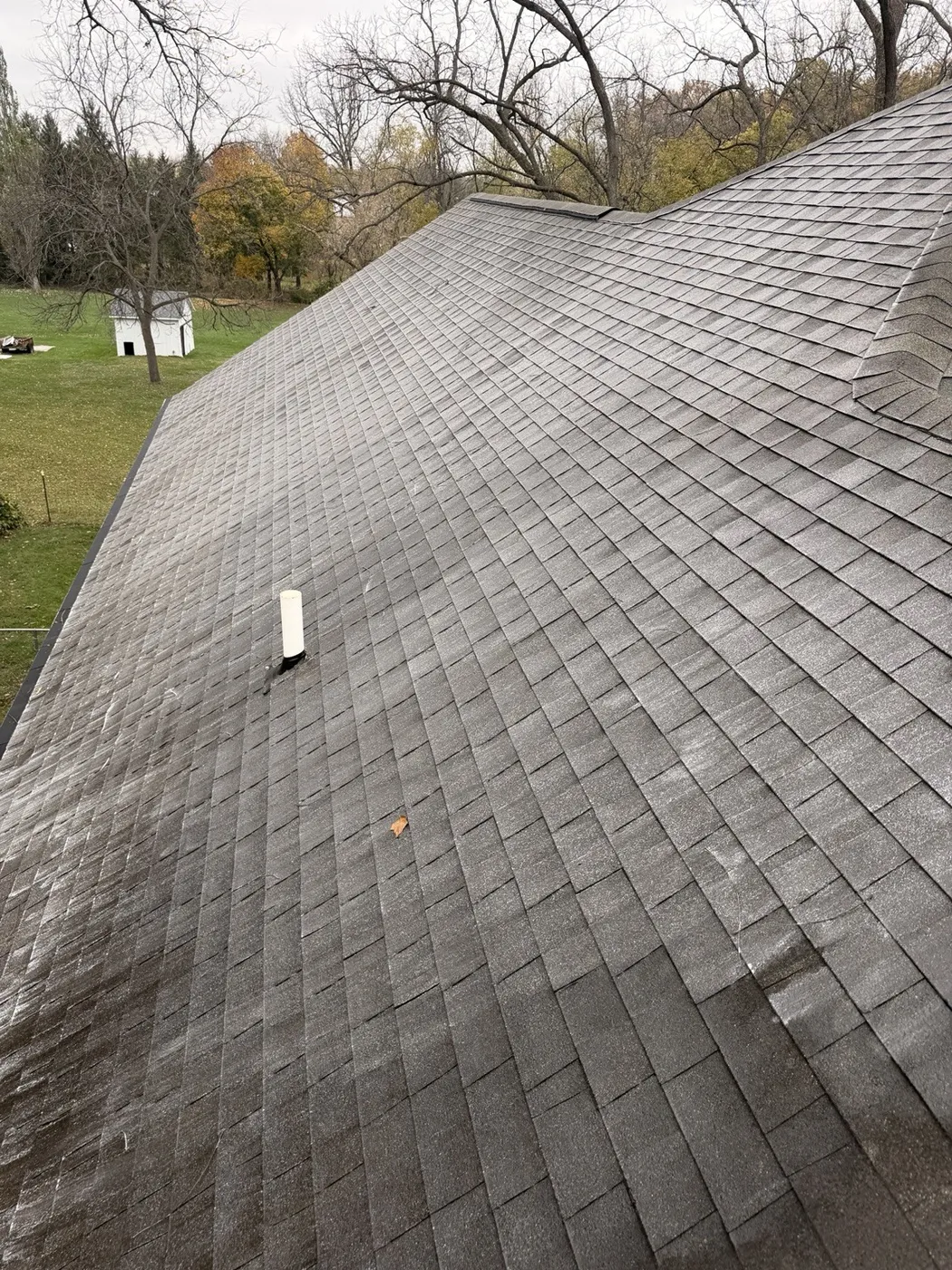
So on Sue's roof we soft washed instead. We applied a professional cleaning solution at low pressure, letting the solution, not force, kill the algae at the root. Then we rinsed the roof. This follows the low-pressure approach shingle manufacturers recommend, and it is the same process we use on every roof cleaning job.
House Soft Washing: Siding, Gutters & Window Sills
The siding got the same gentle treatment. Our low-pressure house soft wash removed the green algae, mold and mildew from the vinyl siding, the gutter faces and the window sills. Because we don't rely on high pressure, there's no risk of cracking the siding or forcing water behind the panels, where it can cause hidden problems later.
Driveway & Sidewalk Cleaning
Concrete is tougher than siding or shingles, so it gets a different tool. We cleaned Sue's driveway and sidewalk with a commercial surface cleaner, which spins over the concrete at a steady height and pressure. That gives an even, streak-free finish instead of the stripes you often see after a DIY wand wash. Learn more about our driveway and sidewalk cleaning.
How We Protect Your Property
Cleaning a whole property means working around plants, flower beds and lawn. Before we start, we pre-wet the plants and landscaping, and we keep rinsing them during and after the job. We use controlled low pressure on delicate surfaces like siding, trim and shingles, and we rinse carefully so cleaning solution doesn't sit where it shouldn't.
The Results
The roof's black streaks, the green algae on the siding and gutters, and the dark staining on the concrete are gone. Here's a look at the before and after photos from Sue's home.
How to Keep Algae From Coming Back
Shaded homes in the Rock River Valley will always be prone to algae, but a few simple habits slow it down:
- Trim back branches that hang over the roof so more sun and air reach it.
- Keep gutters clear so water drains away instead of soaking the roof edge and siding.
- Schedule a house wash about once a year to stay ahead of growth on siding, gutters and sills.
- Plan on roof cleaning every few years in shaded areas, before streaks spread across the whole roof.
Roof Cleaning & Soft Washing FAQ
What causes black streaks on my roof?
In most cases the dark streaks on asphalt shingles are Gloeocapsa magma, an airborne algae that lands on roofs, feeds on the limestone filler in the shingles and builds a dark protective coating as it grows. It is most common on shaded and north-facing slopes that stay damp.
Is roof soft washing safe for asphalt shingles?
Yes, when it is done correctly. Soft washing uses a professional cleaning solution applied at low pressure, followed by a gentle rinse. It does not blast the protective granules off the shingles the way a pressure washer can, which is why it follows the low-pressure approach shingle manufacturers recommend.
Will cleaning my roof lower my energy bills?
It can help. A dark, algae-covered roof absorbs more of the sun's heat than a clean one, so removing the algae can reduce how much heat the roof takes in during summer. How much difference you notice depends on your shingles, attic insulation and ventilation, so we don't promise a specific savings number.
How often should a shaded home be cleaned?
For a home under mature trees like Sue's, a house wash about once a year keeps siding, gutters and sills ahead of algae. Roofs usually need cleaning every few years in shaded areas, depending on how quickly the streaks come back.
Does soft washing harm plants?
We take care to protect them. We pre-wet plants and landscaping before we start, keep them rinsed while we work and rinse them again when we finish, so the cleaning solution is diluted and washed away.