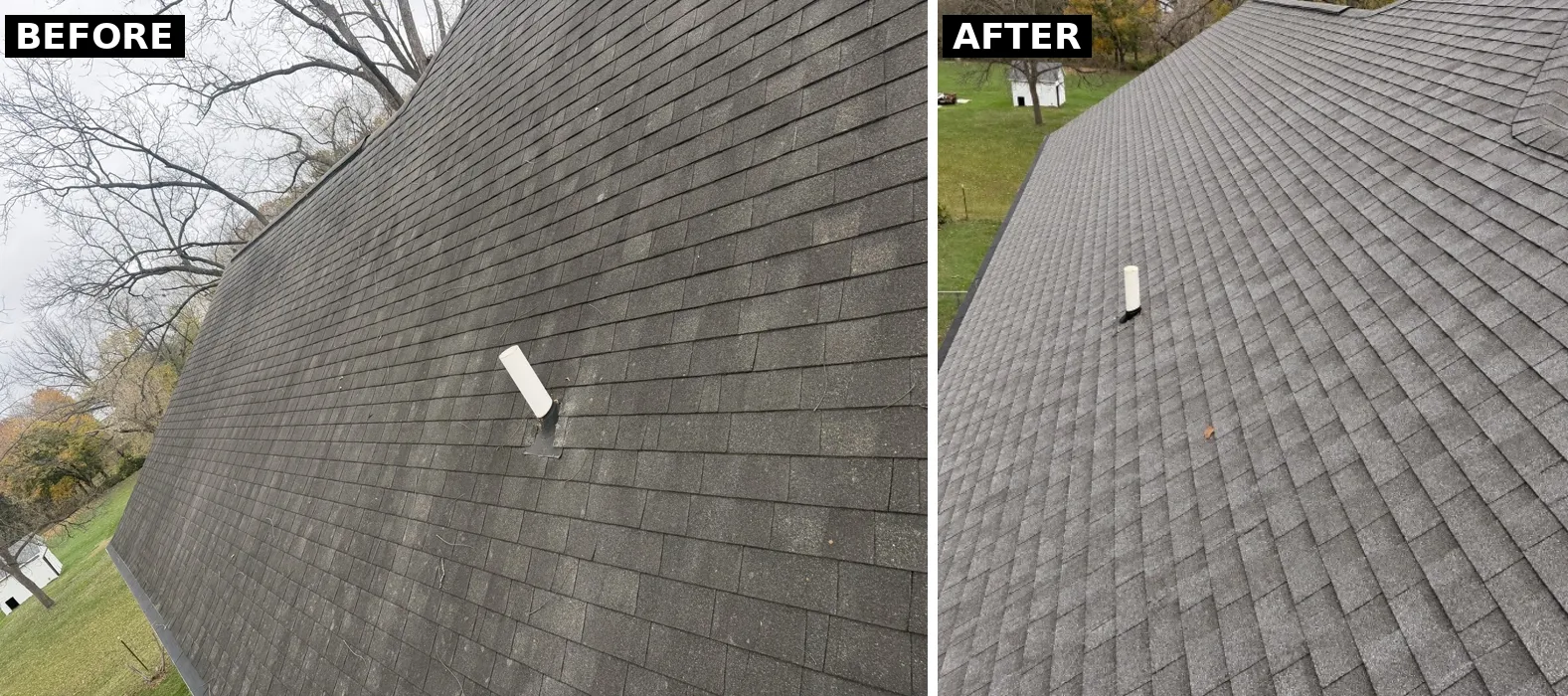
Walk through almost any neighborhood in Sterling, Dixon or Rock Falls and you'll spot them: dark streaks running down asphalt shingle roofs, usually heaviest on one side of the house. Many homeowners assume it's dirt, soot or the shingles wearing out. In most cases it's something else entirely, a type of algae called Gloeocapsa magma.
This guide explains what Gloeocapsa magma is, why it shows up on some roofs and not others, what it can do to your home over time and, most importantly, how to remove it without damaging your shingles.
What Is Gloeocapsa Magma?
Gloeocapsa magma is a hardy, airborne algae. Its tiny spores are carried on the wind and settle on rooftops. Once there, the algae finds an easy food source: the limestone filler that many asphalt shingles contain.
As a colony grows, it produces a dark outer coating that shields it from the sun's UV rays. That coating is what you're seeing when a roof looks black or dark gray in streaks. Up close the growth can look like a dark stain baked into the shingle, which is why so many people mistake it for dirt or damage.
Why the Streaks Appear Where They Do
If you look closely, you'll notice the streaks aren't spread evenly. They're usually worst on north-facing slopes and on parts of the roof shaded by trees. That's because algae needs moisture, and those areas stay damp far longer after rain, snowmelt or heavy morning dew.
The streaks also tend to follow the way water runs down the roof. Rain carries spores and nutrients downhill, so the colony spreads in long vertical lines from the ridge toward the gutters. In the Sauk Valley, where many older neighborhoods have big shade trees and humid summers, these conditions are common. Because spores travel on the wind, once one roof on a street has algae, nearby roofs often follow.
Is Gloeocapsa Magma Harmful to Your Roof?
The algae itself doesn't eat through a roof overnight, but it isn't harmless either. Over time it can affect your home in several ways:
- Heat absorption: a dark, algae-covered roof absorbs more of the sun's heat than a clean one, which can add to attic heat and summer cooling costs.
- Moisture: the growth holds moisture against the shingles, and constant dampness can contribute to wear and may shorten the roof's useful life.
- Moss and lichen: shaded, damp roofs with algae often develop moss and lichen too, which can lift shingle edges as they grow.
- Curb appeal and resale value: streaked shingles make a home look older and less cared for, which can matter to buyers.
Why You Should Never Pressure Wash a Roof
When homeowners see a dirty roof, the first instinct is often to grab a pressure washer. For asphalt shingles, that's a mistake. Each shingle is coated with mineral granules that protect the asphalt from UV rays and give the roof its color. High pressure can blast those granules off, and they can't be put back.
Pressure washing can also lift, loosen or crack shingles and push water up underneath them. It can be dangerous for the person on the roof, too, because a wet roof and a high-pressure wand are a risky combination. And some shingle manufacturers' warranties may not cover damage caused by pressure washing. That's why industry guidance from shingle manufacturers points toward a low-pressure cleaning approach instead.
The Safe Way: Soft Washing
Soft washing removes Gloeocapsa magma by treating it, not blasting it. A professional cleaning solution is applied to the roof at low pressure. The solution kills the algae at the root, along with moss and lichen. After it has had time to work, the roof is gently rinsed.
Because the algae is actually killed rather than just knocked off the surface, results last much longer than a quick rinse. A careful soft wash also includes protecting the property: pre-wetting plants and landscaping, rinsing them during and after the job, and rinsing the gutters and siding below the roofline. You can see how we do it on our soft wash roof cleaning page.
A Real Example From Dixon, IL
Sue's home in Dixon is surrounded by mature trees that keep it shaded through the summer. That shade let Gloeocapsa magma spread across her asphalt roof, and algae had also taken hold on her vinyl siding, gutters, window sills, driveway and sidewalk. We soft washed the roof and siding at low pressure and cleaned the concrete with a surface cleaner. The black streaks came off without blasting the shingles. See the before and after photos in our Dixon roof cleaning and house wash case study.
Can You Remove Roof Algae Yourself?
Some homeowners try store-bought roof cleaners. They can help on light growth, but there are real drawbacks. Working on a roof is dangerous, especially on steep or wet shingles. Mixing and applying cleaning solutions incorrectly can harm plants or leave the roof looking blotchy. And using too much pressure, even with a garden-hose attachment, can loosen granules.
If you do try it yourself, never use a pressure washer, protect your plants, and stay off steep roofs. For most homeowners, hiring a professional who soft washes roofs regularly is the safer choice.
How to Keep the Streaks From Coming Back
No cleaning makes a roof permanently immune to algae, especially in shaded areas. These habits help slow its return:
- Trim overhanging branches so more sunlight and air reach the roof and it dries faster.
- Keep gutters clear so water drains away instead of pooling at the roof edge.
- Clear leaves and debris off the roof, since they hold moisture against the shingles.
- Schedule a roof cleaning every few years if your home is shaded, before streaks spread across the whole roof.
- Ask about algae-resistant shingles if you're planning a roof replacement.
When to Call a Professional
If you're seeing black streaks, green moss patches or one side of your roof is much darker than the other, it's a good time to have it looked at. Rock River Home & RV soft washes roofs across Sterling, Dixon, Rock Falls and northern Illinois, and we can clean the siding and driveway at the same visit. Visit our roof cleaning service page to learn more, or call 779-251-9133 for a free estimate.