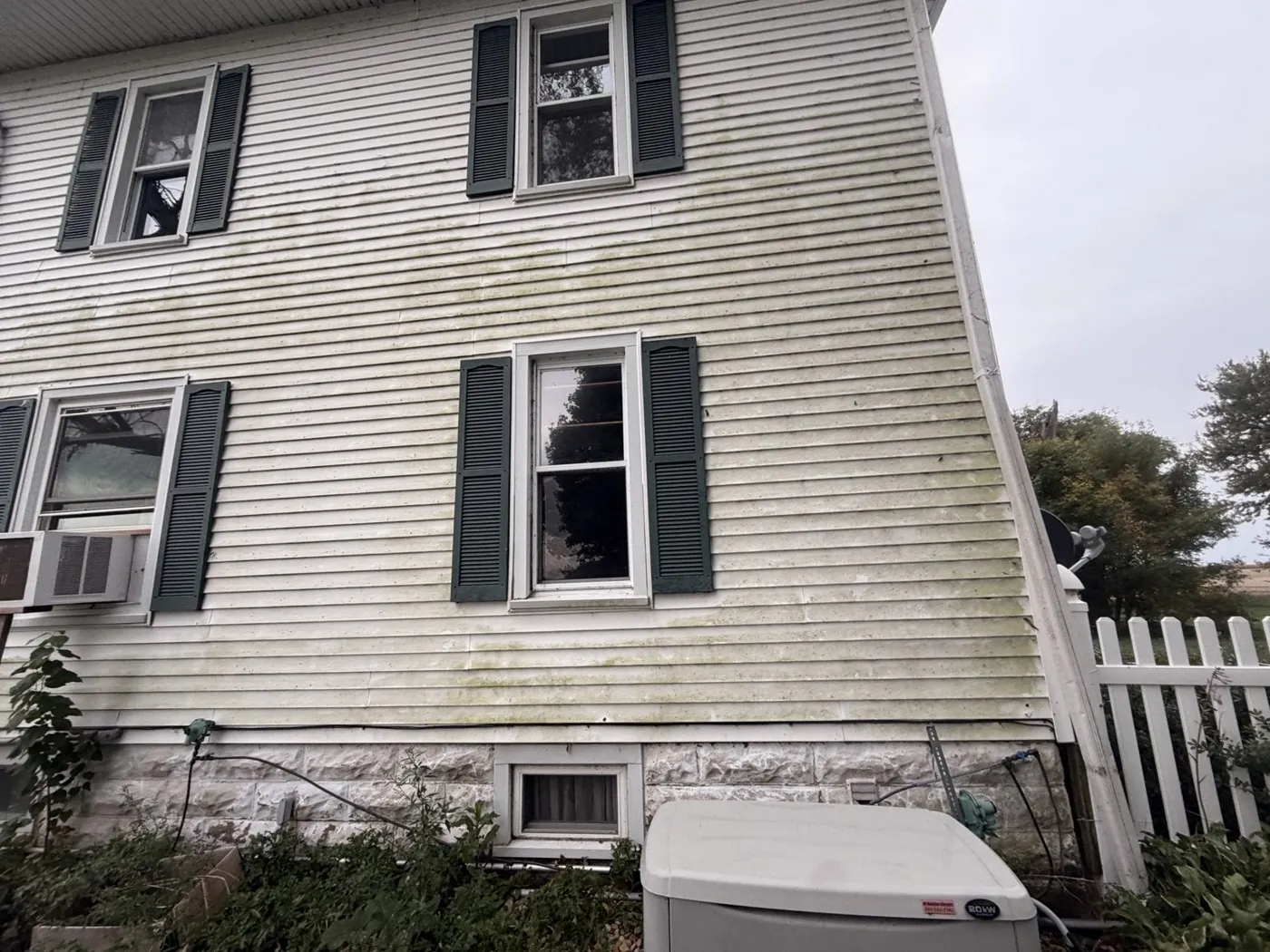
You look up at your house one spring morning and notice it: a green tint creeping across the siding, maybe with darker streaks along the bottom edge of each board. It's one of the most common questions we hear from homeowners across Sterling, Dixon, Sublette and the rest of northern Illinois. Here's what that growth is, why it shows up where it does, why it's worth dealing with and how to clean it without damaging your siding.
What Is the Green (and Black) Growth on Siding?
In most cases, the green film is algae. Algae spores are everywhere in the air, and when they land on a surface that stays damp, they start to grow. On vinyl siding, the growth usually begins as a light green haze and spreads into darker green bands.
The black or dark gray spots and streaks are often mildew or mold, which tends to grow alongside algae in the same damp areas. You may also see a gritty brown or gray layer, which is usually dirt, pollen and dust stuck to the growth. Vinyl itself doesn't feed the algae; the growth lives on the dirt and organic material that collects on the surface.
Why Shaded and North-Facing Walls Get It First
Algae needs moisture, and the walls that stay wet longest are the ones that grow it first. In northern Illinois, that usually means:
- North-facing walls, which get little direct sun to dry them out.
- Walls shaded by trees, porches, neighboring houses or tall shrubs.
- Areas below leaky or overflowing gutters, where water runs down the siding.
- The lower few feet of siding near lawns and plant beds, where sprinklers and splash keep it damp.
- Homes next to open fields or rivers, where humidity, dew and wind-blown spores are common.
The growth collects in the laps of the siding, the little ledge where one board overlaps the one below it. Water and dirt sit on that ledge longer than anywhere else, so that's where you'll see the first green lines. On white and light-colored siding, it shows up much sooner than on darker colors.
Why It Matters
It's tempting to ignore a little green, but it rarely stays little. Here's why it's worth cleaning:
- Appearance: green and black streaks make a well-kept home look neglected, and the growth spreads over time.
- Staining: when growth is left for years, it can leave stains that are harder to clean.
- Moisture: algae and mildew hold moisture against the siding, trim and window frames.
- Curb appeal and resale: if you're selling, dingy siding is one of the first things buyers notice in listing photos and walk-throughs.
Why DIY Pressure Washing Can Damage Vinyl
Many homeowners reach for a rented or store-bought pressure washer. On vinyl siding, that can cause more problems than it solves. High pressure can crack, gouge or warp vinyl, especially older or cold, brittle panels. Spraying upward drives water behind the siding and into the wall, where it can lead to hidden moisture problems. It can also damage window seals, shutters, light fixtures and outlets.
Even when nothing breaks, pressure alone usually only removes the surface growth. The roots stay behind in the siding laps, and the green can come back within months. For a full side-by-side comparison, read our guide, Pressure Washing vs. Soft Washing: Which Is Right for Your Sterling Home?
How Soft Washing Works
Soft washing is the method professionals use for siding. Instead of relying on force, it uses a professional cleaning solution applied at low pressure. The solution kills the algae, mold and mildew at the root. After it has time to work, the siding is rinsed gently from the top down.
A careful soft wash also protects the property. Plants and landscaping are pre-wet before the solution goes on and rinsed during and after the job. Windows, shutters and fixtures get low pressure only. Because the growth is killed rather than just knocked off, the siding stays clean longer than it would after a simple rinse. Learn more about our house washing and soft washing service.
A Real Example From Sublette, IL
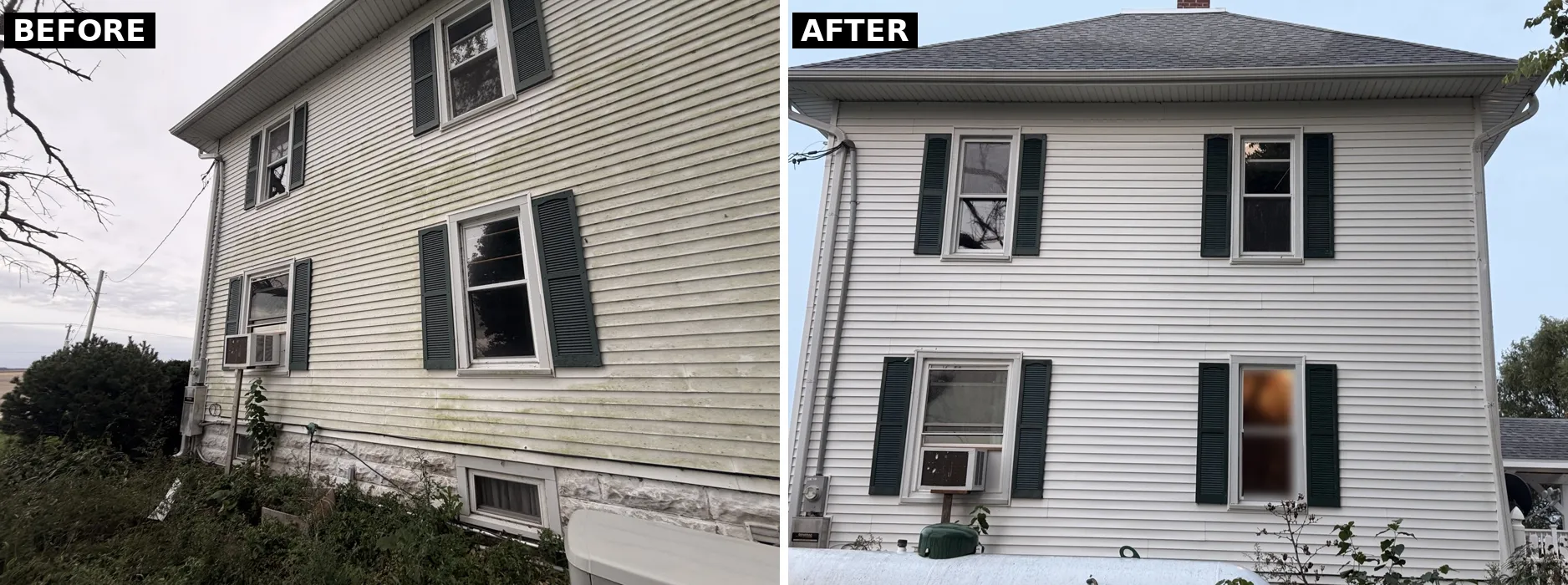
Lisa's white two-story home in Sublette is a textbook case. Shade from a big yard tree, morning dew and wind off the surrounding fields let green algae and black mildew settle into nearly every lap of the siding, especially on the shaded walls and an outbuilding. A low-pressure soft wash brought the siding back to bright white without harming the shutters or the hostas planted along the walls. See the full set of photos in our Sublette house soft wash case study.
What to Expect From a Professional Soft Wash Visit
If you've never had your house soft washed, here's how a typical visit goes. We start with a walk around the home to look at the siding, note any loose or damaged panels, and check windows, shutters, outlets, light fixtures and plant beds. If something is already cracked or faded, we point it out before we start so there are no surprises.
Next, we pre-wet the landscaping and apply the cleaning solution at low pressure, usually working from the bottom of each wall up so it covers evenly. After the solution has had time to work into the siding laps, we rinse from the top down. Gutters, soffits and trim along the way are rinsed too. At the end, we rinse the plants again and walk the property with you if you're home.
Most homes are finished in a single visit. Garages, sheds and other outbuildings with the same siding can often be cleaned at the same time so everything matches.
Green Growth on Other Surfaces
If your siding is turning green, check the rest of the property too. The same conditions that feed algae on a shaded wall often show up on the north side of the roof as black streaks, on wood decks and fences as a green or gray film, and on shaded concrete as dark, slippery patches. Each surface needs its own approach: soft washing for roofs and siding, and the right pressure for concrete and wood. Cleaning them together keeps the whole home looking consistent.
How to Prevent Regrowth
No cleaning makes siding permanently algae-proof, but you can slow it down:
- Trim tree branches and shrubs that shade the siding or touch the house.
- Keep gutters and downspouts clear so water doesn't spill down the walls.
- Aim sprinklers away from the house.
- Give shaded walls more airflow by thinning dense plantings right against the siding.
- Schedule a soft wash every one to two years, or yearly for heavily shaded homes.
When to Call a Pro
If the green has spread across a whole wall, if you have a two-story home, or if you're not comfortable on a ladder, it's a good time to call a professional. The same goes if you see black mildew around windows or growth on the roof. Rock River Home & RV soft washes homes across Sterling, Dixon, Rock Falls, Sublette and northern Illinois. Call 779-251-9133 or request a free estimate.